
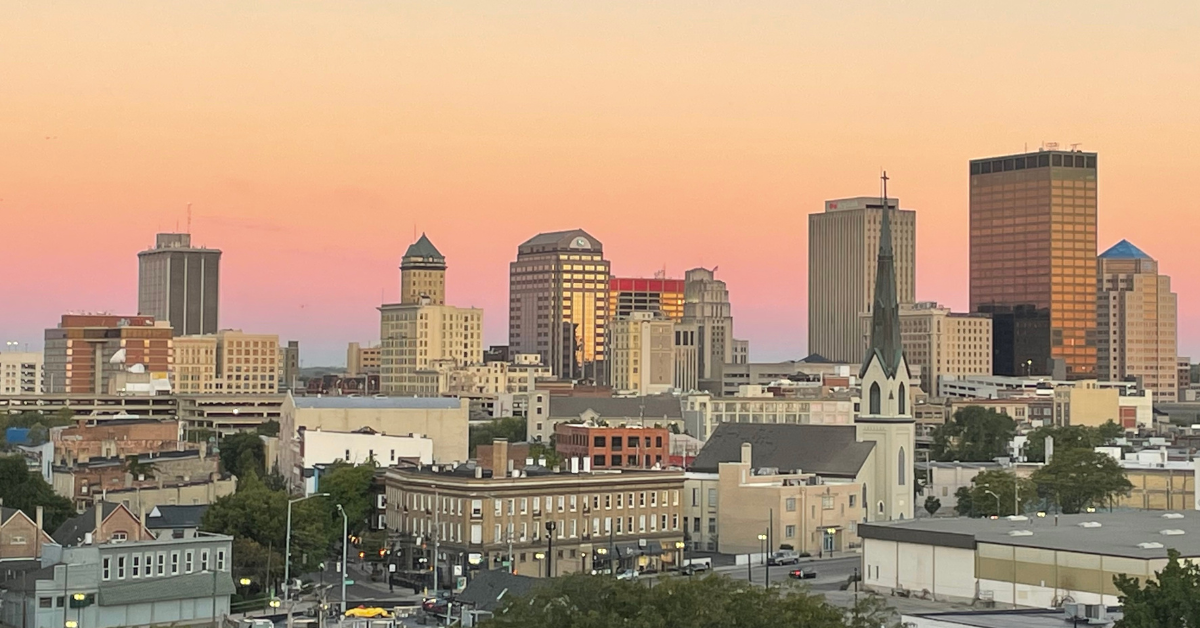
My family came to Dayton because they believed Ohio could give them a future. My grandfather arrived from Lynchburg, Virginia as a 16‑year‑old kid, leaving behind dirt floors for the promise of steady work and dignity. Once he was settled, his brothers and sisters followed — teenagers chasing the same hope of stability and pride. Dayton delivered. Ohio delivered. For generations, working‑class families like mine carried the weight of policy decisions made far away — and still managed to build something solid.

That’s the Dayton I grew up in. A place where people showed up, worked hard, and trusted that if you did your part, the system would meet you halfway. But over time, that promise cracked.
My dad worked at Chrysler. My mom worked two jobs while going to school at Sinclair — just like I am now. She graduated and earned a position at Twin Valley Behavioral Healthcare (formerly Dayton State Hospital), the only public psychiatric hospital in the region at the time. That job was the reason she went to school full‑time while raising two kids alone. I remember waking up at 3:30 a.m. to go to the babysitter’s so she could make it to her first job followed by classes, just to go to her second job, followed by night classes. She did everything right. And then the hospital closed on June 30, 2008 — part of statewide budget cuts. All that sacrifice, all that hope, erased by a line item in a budget.
And that wasn’t just Dayton. Ohio has been closing psychiatric facilities for years. Georgetown Behavioral Hospital shut down in 2024. MetroHealth’s psychiatric emergency department closed in 2025. Entire regions have been left without adequate mental‑health care. Families like mine felt every one of those decisions.
As a Sinclair student today, I see how many of us are carrying the weight of these same systemic issues — working jobs, caring for family, navigating healthcare gaps, and trying to build a future in a state that hasn’t always invested in us. My story isn’t unique here. It’s part of the fabric of who we are as students.
My family didn’t just live in Dayton — they helped build it. My uncle worked on the massive renovation at Miami Valley Hospital, pouring his skill and sweat into a place that has cared for generations of Ohio families. My grandmother retired from MVH after a lifetime of service. Their work is literally in the walls of that building. When policymakers talk about “the economy” in abstract terms, I think about people like them — people whose labor shaped the state in ways you can still touch.
Growing up, I went to the Air Force Museum at Wright‑Patterson at least once a month. It was free, it was close, and it taught me what freedom actually costs. WPAFB isn’t just a Dayton institution — it contributes billions to Ohio’s economy and supports tens of thousands of jobs statewide. The museum taught me that freedom isn’t an abstract idea — it’s a responsibility. It’s something you protect by paying attention to the world around you.
And then there was the Oregon District shooting in 2019 — a night every Daytonian remembers. It was the moment when the lessons I learned at the Air Force Museum stopped being history behind glass and became something happening on our own streets. It was another reminder that policy debates aren’t theoretical here. They shape whether families make it home at the end of the day.
I remember the Soap Factory sitting empty for years — an eyesore, then a fire hazard, then exactly what everyone feared it would become. It went up in smoke, a symbol of what happens when communities are left to decay while policymakers argue on television about budgets and priorities. The people who lived near it didn’t need another debate. They needed action.
Dayton has always been a place of invention. The Wright Brothers built their dreams here. Their bicycle shop still stands on South Williams Street — the last surviving shop they operated, preserved exactly where they built it. I grew up walking past that building, a reminder that world‑changing ideas can come from ordinary people in ordinary neighborhoods.
That’s why it’s so hard to watch the gap widen between the Dayton we inherited and the one so many families are navigating now.
What happened to my family isn’t unique. It’s the story of countless Ohio families who did everything right and still watched the ground shift beneath them. If we want a better future — for Dayton, for Sinclair students, for Ohio — we have to start by acknowledging the real cost of policy decisions on the people who live with them.
Rebecca Daniels, Sinclair student
Submit your own Letter to the Editor
See more from The Clarion:
- Cyclosporiasis cases exceed 4,000 in Ohio

- Sinclair’s Adjunct Faculty Support Office moves to Building 7
- Loveland Frogman could be named Ohio’s official state cryptid
- PHOTOS: Dayton Celtic Festival returns for 25th year

- Clarion Cuisine: Lucho pairs eclectic atmosphere with vibrant menu