

The current state of journalism is a subject of intense scrutiny. Many people generalize the complexity of the industry’s problems and simply call “the media” corrupt, disingenuous, biased and fake.
There is merit to these claims. Many of the biggest news companies lean politically one way or another, which affects how and what they report. However, the unfavorable and unethical practices of certain companies should not be ascribed to the entire industry.
The problem will only be further exacerbated by the continuation of industry consolidation and the increasing amount of “news deserts.” These news deserts are the result of a sustained loss of local reporting due to closures of small newspapers, especially in rural areas.
While the issue at hand can feel overwhelming and uncontrollable, certain people have taken notice and taken action to combat the issues within the industry. One of those initiatives is taking place right here in Dayton.
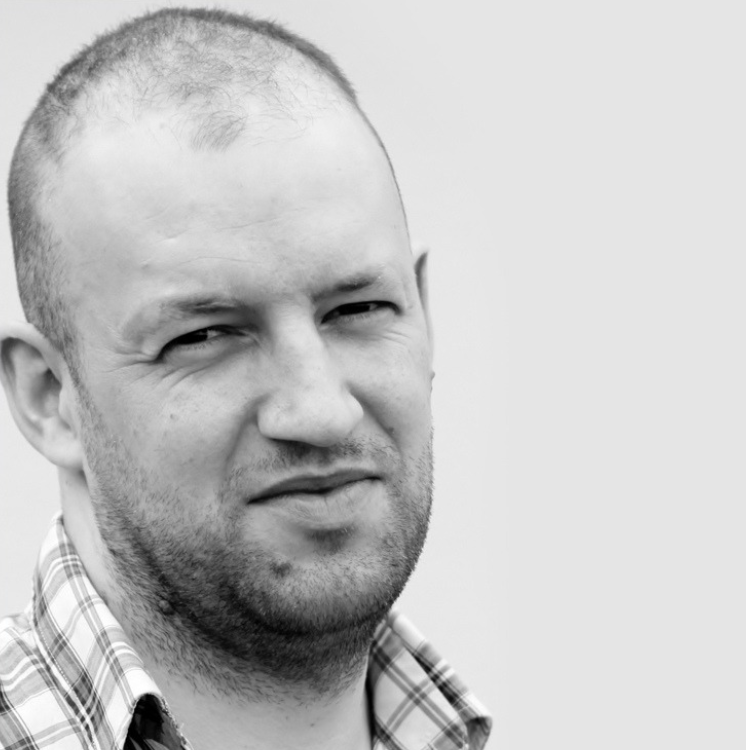
The Journalism Lab has been operating since 2020, focusing on teaching community members to engage with journalism and media in a more active and thoughtful way.
Stephen Starr, one of the four cofounders of The Journalism Lab, had lived and worked as a journalist for 10 years in Syria and Turkey. He recounted a failed coup that happened in Turkey in July of 2016 and the fallout after; the government silenced the media, arrested thousands of journalists and even detained judges.
After moving to Dayton in 2018, Starr began to see similar attitudes and behaviors towards the media in America.
“I was getting a feeling that there was kind of echoes of similar activity and criticisms of the press,” he said. “So I kind of felt that America is like the big dog in the yard, and if democracy goes by the wayside here, then it’s not just an issue for Americans; it’s a problem for people around the world.”
Related: Calling out the press or silencing it? The White House’s troubling new tactic
These commonalities that Starr saw sparked what he describes as “the genesis of The Journalism Lab.”
“It was kind of just to put journalism tools in the hands of everyday folks because it’s just an important function of democracy,” Starr said.
The Journalism Lab equips people with these tools through various avenues of outreach. One of their most recent events was the Dayton Journalism Summit held at the Dayton Metro Library’s downtown branch in January.
At the summit, any interested person was able to sign up, free of charge, to different classes from photojournalism to pitching a news story put on by various industry professionals.
We realized relatively early on that media literacy is at a shocking place right now.
NICK HRKMAN
The lab has many different modes of outreach, but learning the tools to write a newsworthy article is just half the battle. Understanding how to consume the news is just as important. Unfortunately media literacy across the nation has been on a decline.
This is in part due to the sheer amount of information online, the active spread of disinformation and the way in which social media algorithms prioritize engagement activity over accurate, verifiable information.
In a 2025 study, the Pew Research Center reported that 86% of Americans get their news from a smartphone, computer or tablet. About a third of American adults get their news from the internet or social media with younger people tending to favor the latter.
Nick Hrkman, another cofounder of The Journalism Lab, has noticed the need for media literacy education within schools and, with the lab, has gone to high schools around Dayton to educate students on ethical media consumption.
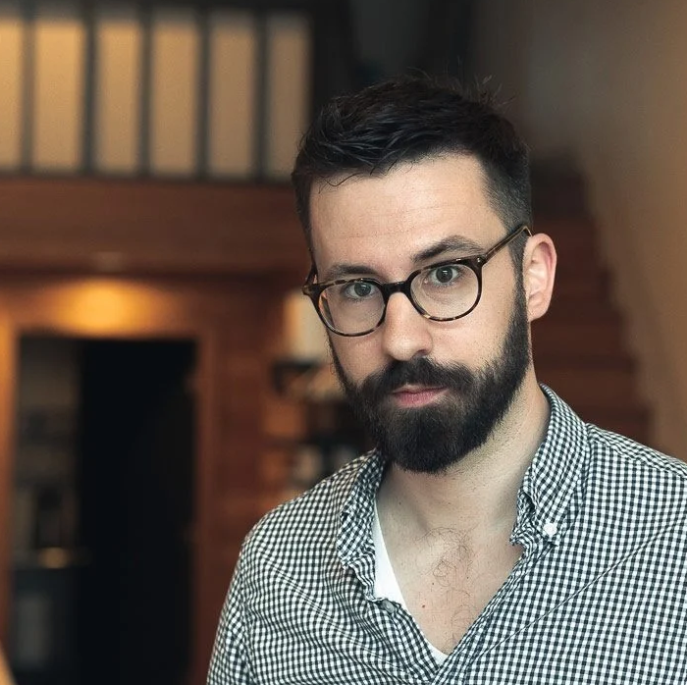
“We realized relatively early on that media literacy is at shocking place right now,” Hrkman said. “I think it’s important to get these kids as early as they can to be thinking critically about what they’re consuming, their media habits and their consumption habits, making sure that they’re thinking really hard and not just being a passive kind of consumer without applying a critical lens to this stuff.”
Hrkman, a lifelong Dayton resident, graduated from Stivers School for the Arts and decided to pursue journalism as a career after the murder of his high school instructor and Dayton Daily reporter, Derek Ali. He attended Ohio University and talked about how he had planned to leave Dayton behind.
Although, for Hrkman, his hometown, family and the connections he had made here ultimately brought him back. Following in the steps of his late mentor, Hrkman began working for Dayton Daily News, becoming an editor and instructing some of his own classes and workshops in high schools around the area.
For many people, a job is merely what they do for money. For Hrkman, he has made his career based on the passion instilled in him by Derek Ali.
“I wanted to be like Derek. I wanted to grow up and do what he did and make him proud,” he said.
Passion for the work being done is the foundation of The Journalism Lab and its leaders. One of the most passionate was the late cofounder Mary Evans.
The Journalism Lab suffered a heavy blow last June with the unexpected passing of Evans. To her peers, she was an invaluable part of the lab.
“Mary was one of a kind. She was the heart and soul of the lab. She was well known by everybody in the journalism community in the Dayton area. She had such a passion for telling other people’s stories, which as a result, made her such a an incredible journalist,” Starr said.
Hrkman recalled the shaky grounds the lab started on and the common struggles that the cofounders shared.
“From the beginning, it was very much co-equal. All four of us were in it together,” Hrkman said. “So it really, it felt like losing a fourth leg of a stool kind of thing. And we just were wobbly. It was very, very hard for us.”
Evans is remembered for her dedication to her work, community and peers. She worked nonstop with the lab to share her knowledge and skills with young journalist and students all over the Dayton area. After Evans’s passing, the lab even considered shutting down.
“We considered if we wanted to continue the organization or not after her passing. It was a big setback, but I think we all kind of collectively agree that’s not what she would have wanted,” Hrkman said.
The Journalism Lab carries on in her memory, seeking to continue the work that they started together.
[Mary Evans] was the heart and soul of the Lab.
STEPHEN STARR
One of the lab’s main methods of outreach is “The Co-Laborative” monthly meetings.
The meetings provide a space for anyone interested in attending to discuss problems or ask questions about the industry or current events in the news.
It is not a place for an activist to read their manifesto, but rather a place where industry standards, practices and trends can be talked about earnestly.
One of the aspects of the labs that Starr likes the most is the discourse that happens within the discussions. He sees Dayton as a healthy mix of both sides of American culture and politics.
“[In Dayton] there’s a lot of suburbs that kind of lean conservative, and then there’s downtown areas that may be more liberal. And so there’s a kind of a good mix of both, right?” Starr said. “You know, it’s not New York City, where you just get one particular political perspective, and it’s not kind of rural Kansas, where you get the same but the total other side.”
Starr says that Dayton’s variety of leanings and opinions represents the nation at large.
The Journalism Lab seeks to create a space where disagreements can happen civilly and where real learning can take place, whereas more culturally homogenous communities cannot create the same environment because of the lack of differing ideas.
“You’re just going to get a room full of nodding heads. It’s going to be an exit chamber. I don’t think there’s going to be a lot of learnings kind of done. And so [in Dayton,] I think there’s an opportunity to reach people across any kind of culture or political divide,” Starr said.
The concept of collaboration stands out as contradictory to the stigma of hyper-competitiveness within journalism. The industry is widely known for being cut-throat, but this is exactly what the lab wants to dispel.
“I feel like we were responding to some of the same kind of trends in the industry and hopefully shifting away from some of that hyper-competitive attitudes and mentalities and zero-sum game,” Hrkman said.
I think collectively, the industry is waking up to the fact that we are all under attack from all sides… It doesn’t have to be that way.
NICK HRKMAN
The attitudes toward journalism has transformed drastically from what they used to be. The industry is met with more skepticism, anger and dismissal than ever before. For journalists, this can be draining, which is why the lab has become a bastion for many Dayton journalists.
“I think collectively, the industry is waking up to the fact that we all are under attack from all sides,” Hrkman said. “And if you’re a working journalist, you feel it, you feel run down, you feel overworked, and with the stresses of the job, it’s overwhelming. So, I think what a lot of us acknowledge and recognize is that that it doesn’t have to be that way.”
The job of a journalist can be stressful and demanding and leads many to burnout and grow apathetic to the industry, which is one the factors that has led to its decline.
In a study done by Muck Rack, it is estimated that there has been a nearly 75% decrease in local journalists since 2002. There used to be roughly 40 journalists for every 100,000 people; as of 2025, there is less that 8.2 journalists per 100,000 people.
There are many more factors that have contributed to this decline, a large proportion being the shuttering of many local newspapers throughout the country, decimating the supply of journalism jobs.
Another issue is that there are not many young people going into the industry.
For Starr, he believes that journalism has taken on too heavy of a burden for people to be interested in joining the industry.
Since 2002, journalists have decreased from 40 per 100,000 people to less than 8.2 per 100,000 people.
He noted how often journalism is tied to the idea of upholding and defending democracy. He believes it does do this function but says that is not what the drawing factors should be.
“The point is you basically need to make journalism sexy again, and make it attractive as a career path, and not link it to being a savior of democracy,” Starr said.
There are many different paths a journalist can take like sports reporting, gonzo journalism and investigative journalism. While the press is a vital function to democracy, it is not every journalist’s intention to be a watchdog of the government.
But each discipline requires the same skills and methods to be a proper reporter. The Journalism Lab is available and willing to help anyone, amateur or professional, learn the skills to pitch, research and write a well-developed, newsworthy article.
The Journalism Lab is looking forward to continuing their outreach and connecting with more people within the Dayton community.
“The more we can meet people in the flesh and engage with people and talk about journalism, why it’s important, how you can do it, where you can do it, the tools you need to do [it], the better,” Starr said.
For information on meetings, events and more, visit The Journalism Lab’s website.
Noah Schlarman, executive editor
See more from The Clarion:
- MyVoice: Proposed federal loan cuts put humanities degrees at risk

- Clarion cuisine: La Monarca: Tacos, ice cream and all one could want in a Central American restaurant

- MyVoice: The ones who hold the glue stick

- Sinclair gives students plenty to do this October

- Dayton Battle of the Bands calls local musicians to the stage
