

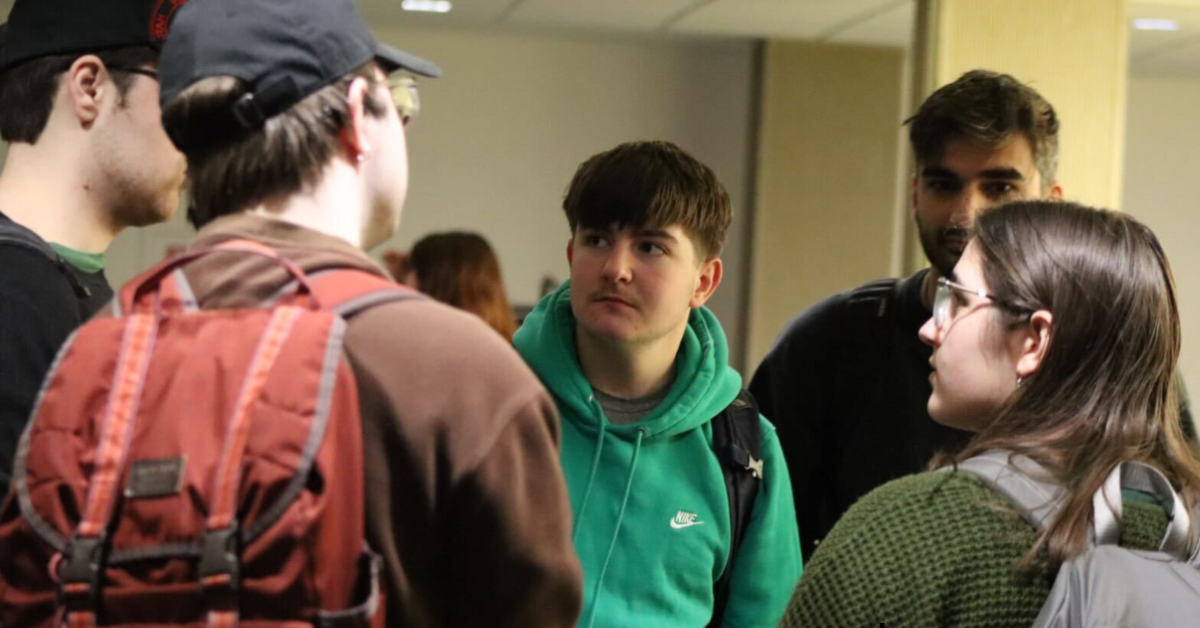
Over the years, Sinclair College has served a wide range of students; from recent high school graduates to adult learners balancing work and family life.
As a more commuter-heavy campus with no active sports for students to attend, opportunities for larger events on campus are limited. Questions often arise about how connected students really feel to the campus community and how engagement plays a role in their college experience.
Karmyni VanPelt

VanPelt is a first-year student in her second semester at Sinclair, majoring in criminal justice. She said she chose to attend Sinclair for its location and affordability
VanPelt said she feels a sense of community exists on campus on a small scale, mostly in classrooms.
“You make your little friends in classes, and then you go study together in the library,” VanPelt said. “But there aren’t sports teams for students to attend, so maybe it is lacking a little.”
Although she is aware of campus events through emails and posters, VanPelt said work and class schedules often prevent her from attending. She believes adding sports can strengthen connections on campus.
“Maybe like a basketball team or something, so there’s more community and there’s a sport people can go to,” VanPelt said.
Zenon Cardenas
Cardenas is a computer science student who has been enrolled at Sinclair for several years but recently began attending classes on campus. He said he sees multiple smaller communities rather than one unified one on campus.
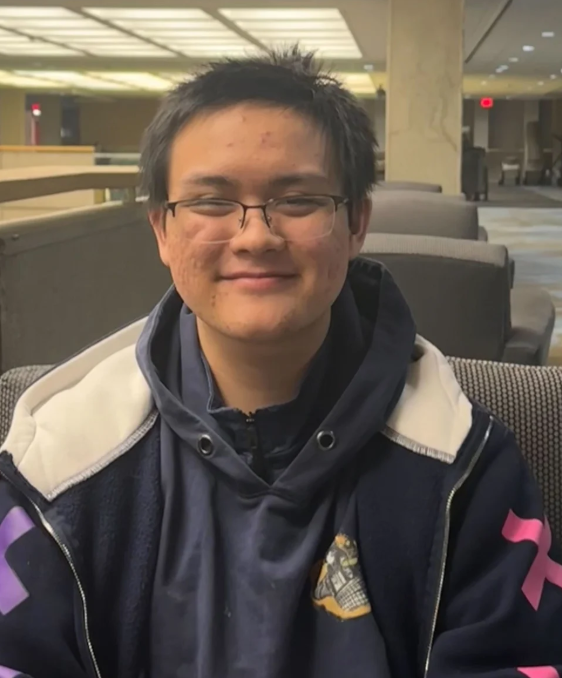
“It’s not a Sinclair community, it’s communities in Sinclair,” Cardenas said. “People tend to form strong groups, but they’re separated.”
Despite that, Cardenas spoke highly about Sinclair’s affordability, facilities and academic environment, mentioning that students and instructors seem invested in learning. While Cardenas feels supported by peers and professors, he says some support is available when needed, but notes unfamiliarity with Sinclair’s leadership.
“I don’t remember the name of the dean,” Cardenas said. “I could tell you the name of maybe two of my teachers, but not the higher-ups.”
Jessie Ngowoh
Ngowoh is a biology major almost done with her degree at Sinclair. She said her sense of community at Sinclair has changed over time. During her first semester, she became involved in Sinclair African Students Association and student government, where she found strong connections. As classmates graduated, that sense of community faded.

“I think Sinclair does have engagement,” Ngowoh said. “But you have to find a community you belong to.”
Ngowoh said students who are involved in organizations are more likely to stay on campus and use the shared spaces like the library and other common areas, while others often attend classes and leave. Looking ahead, she said she hopes Sinclair continues to find ways to encourage students to connect and engage throughout their time on campus.
While students’ experiences vary, many agree that community does exist, but in a small, student-driven space rather than across a whole campus. For some, that connection comes from classrooms and clubs, while others move through campus without engaging beyond their classwork.
While Sinclair continues to serve a diverse, commuter-focused student body, students’ outlook suggests that strengthening that connection may depend on individuals doing, but also being provided more opportunities for that engagement.
Jacie Moore, reporter
Check out more from The Clarion:
- Editorial: AI is not journalism

- Tartan Spotlight: Nadine Cichy

- YourVoice: Students weigh in on campus parking
- 5 tips for a successful semester
- Labor Day: A day off with a history of hard work