


Ranked Choice Voting (RCV) is an election reform effort that has both gained and lost traction across the country in recent years.
Also called instant-runoffs, it involves ranking candidates on a single ballot in order of preference. If one’s preferred candidate doesn’t win, their vote transfers to their second choice and so on until a majority is reached.
Other countries such as Ireland and Australia have used the system for more than 100 years, and several U.S. states have followed.
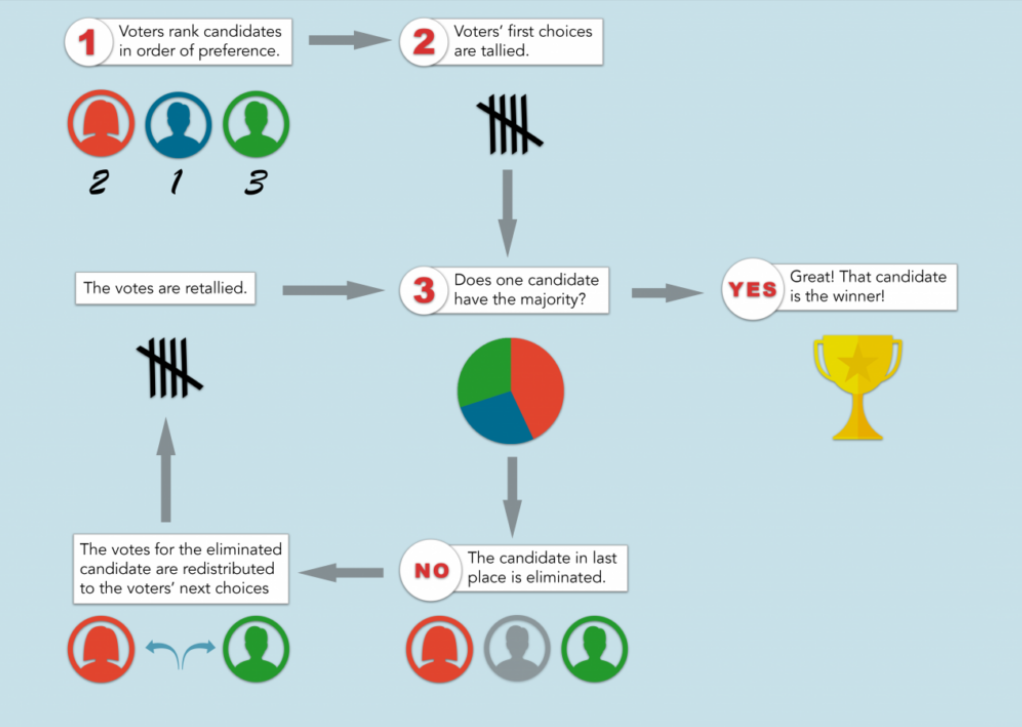
Supporters of RCV say that current U.S. elections follow a “winner take all” format where a candidate may win without a true majority of votes, usually by splitting the vote of another party. They say this “plurality voting” leads to ugly campaign tactics and discourages voters from going outside the two major political parties for fear their voice will be wasted.
Opponents of RCV say the system is confusing and could even lead to people leaving their polling centers without having voted properly. They also cite concerns that manually counting ranked votes on a large scale would be a long, labor-intensive process with more room for error; and if automated, counting would require significant, costly software updates.
President Donald Trump is among those opposed to implementing RCV, calling it “disastrous and very fraudulent” as he urged Alaskan voters to stop its use in 2024.
As some states advance the use of this system, others are working to block it.
The first U.S. jurisdiction to adopt RCV was Ashtabula, Ohio in 1915. Now, Ohio is the most recent state to have passed laws banning it.
On March 17, Gov. Mike DeWine signed a bill into law that prohibits Ohio elections from using RCV on any level. Indiana also passed a law banning its use in February, following bans in West Virginia, Kansas, Wyoming and more.
At the same time, Virginia is strengthening their use of RCV. Following a pilot program that was intended to run from 2021-2031 on local levels, the state passed a law on April 22 that made the program permanent and increased the number of localities who could use it.
Connecticut and Maryland are also seeing advancements in legislation to adopt the system, and its first use in Washington, D.C. will take place this June for its primary elections.
Hannah Kichline, multimedia editor
Check out more from The Clarion:
- PHOTOS: Wellness Fair puts health and happiness on display

- Sinclair Police expand safety awareness through monthly discussions

- Geography professor Scott Reinemann leads research group through Great Basin National Park

- Sinclair recognizes Suicide Prevention Month with student resources

- Dayton Poetry Slam says goodbye to Yellow Cab, announces new venue