

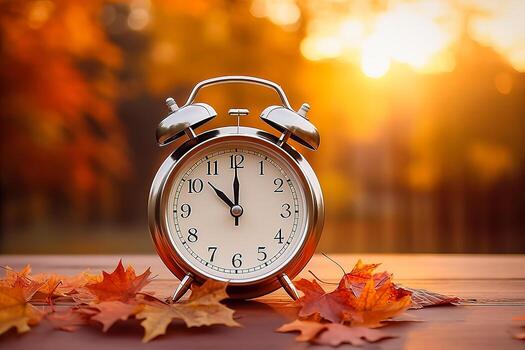
Every November when the clocks roll back an hour, most people cheer for that “extra” bit of sleep. But as cozy as an extra hour in bed sounds, the switch can feel like a jolt to the system.
Suddenly, the sun sets before dinner, mornings feel darker and our bodies take days, sometimes weeks, to catch up. Daylight saving time might seem like a small change, but for many it is a big disruption that sparks one question year after year: Is it really worth it anymore?
Daylight saving time (DST) was first introduced in the United States in 1918, during WWI, as a way to save energy and make better use of daylight. It became permanent with the Uniform Time Act of 1966.

Back then, it made sense: people worked outdoors more and saving daylight hours meant saving electricity. But now, in a world lit by screens and 24-hour electricity, many experts argue that DST has outlived its purpose.
According to the Sleep Foundation, the biggest problem with DST is how it messes with the body’s natural clock, the circadian rhythm that tells us when to sleep and wake up. Our brains rely on light cues from the environment, so when the clock suddenly jumps forward or backward, our bodies struggle to keep up.
The effects can be surprisingly strong. Studies show that after the “spring forward,” people lose an average of forty minutes of sleep.
In the days following, researchers have found upticks in fatigue, workplace errors and even car accidents. Although we gain an hour in the fall, that sudden shift still throws off our internal rhythm, especially for those who already struggle with sleep.
Related: You’ll Do Lousy If You’re Drowsy

A few students gave their insights about the time change, and their reactions were almost identical: frustration, fatigue and a little disbelief that we are still doing this.
Ruth Rahab, a nursing major at Sinclair, notes that the switch always throws her off.
“Honestly, I don’t really like it,” she said. “It always messes with my sleep schedule, especially in the spring when we lose an hour. It feels unnecessary now that we have modern lighting and technology.”
Rahab added that when she was younger, she barely noticed the change, but now with more responsibilities, it disrupts her focus and productivity.
“I’d rather have permanent daylight time,” she said. “I love when it stays light later, it just gives you more energy.”
Related: SAD Affects Individuals

Vanessa Uwonkunda, another nursing major, had a slightly different take but shared Ruth’s frustration.
“I personally dislike daylight saving time,” she said. “It takes me days to adjust and I always end up feeling off and tired. I think we should stay at standard time all year. It fits better with our natural rhythm.”
Interestingly, many sleep scientists agree with her. Experts say permanent standard time is healthiest for our bodies because it aligns with the sun’s natural light patterns, brighter mornings and darker evenings which support better sleep and alertness.
Permanent daylight time, on the other hand, would mean darker mornings in winter which could make it harder for students and workers to wake up.
Whether we keep changing the clocks or finally settle on one system, one thing is clear: That single hour has a much bigger impact than most of us realize.
Maliya Ayambire, reporter