
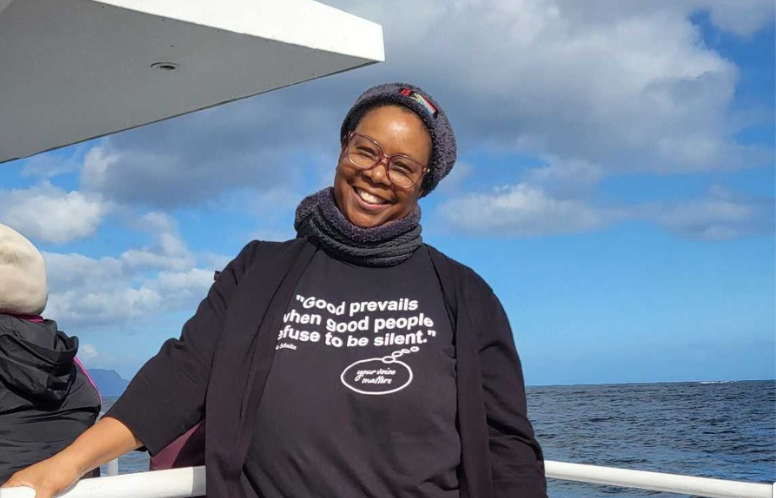
Furaha Henry-Jones is the definition of a polymath. She is a writer, poet, parent and community leader, but thinks of herself as a teacher first.
“I teach and I write,” she said. “I write mainly for myself and figuring out how to move through the world.”
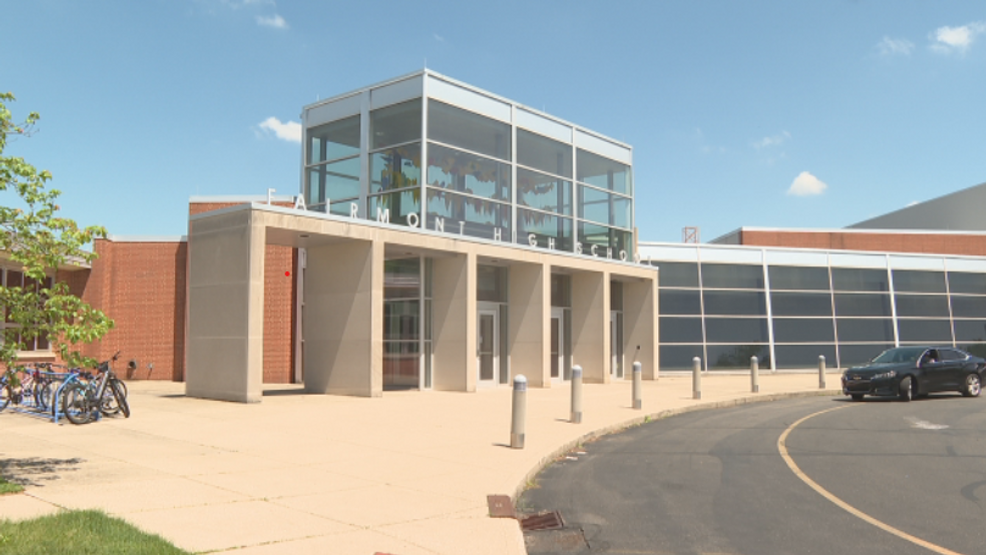
She began at Sinclair 20 years ago after already working extensively with youth. She taught for 12 years at Kettering Fairmont High School before starting at the college, and was a founding staff member at Mound Street Academies, an alternative school for young adults in downtown Dayton.
“That was kind of cool to be part of starting a school from scratch,” she said. “My students were taking some Sinclair classes, and that’s how I became more familiar with Sinclair.”
Henry-Jones wears many hats at the college. She primarily teaches English Composition; once a year offers African American Literature; leads projects through Collaborative Online International Learning (COIL); and takes special enjoyment in her role as advisor for the African American Students Association (AASA).
“[AASA] are a really eclectic group of folks,” she said. “They embody everything I want to be when I grow up.”
“[Founding the Ubuntu Study Abroad program] is the thing that I’m most proud of, that I’ve done here at Sinclair.”
– FURAHA HENRY-JONES
Henry-Jones also serves on the leadership team of the Internationalization Lab and co-founded the Ubuntu Study Abroad Program with Professor Faheem Curtis-Khidr.
“It’s the thing that I’m most proud of, that I’ve done here at Sinclair,” she said.
Henry-Jones has experienced the benefits of going abroad since she studied in Spain at a young age. As part of the program she has led groups of students on trips to Ireland and South Africa, where they gain valuable insight into how many similarities they share with citizens of other countries.
“Interestingly, the very first time I left the United States was the first time that I felt American,” she said. “As a Black person in the United States, so much of the history and the experiences that I had were alienating… It still felt like, okay, am I really from here? Do I really belong here?”
The name of the study-abroad program comes from the South African word Ubuntu, meaning “I am because you are.” Henry-Jones first heard the words from her South African neighbors in Kettering, and compares it to the “agape” love that Martin Luther King Jr. often spoke about.
“I didn’t really get it until I was actually in South Africa,” she said. “Even though there was a lot of conflict between people in terms of understanding, culture, etc., there was a deep caring for each other and a really deep understanding that everything I do affects the people around me, and what you do affects me.”
This spirit of interconnectedness resonates especially with Henry-Jones due to her upbringing. Her mother grew up in the segregated South while her father was raised in Illinois and Minnesota, and both were committed to educating her about Black history and culture.
“They both had experiences through the Civil Rights Movement and that time of America, that really informed me about how much I want people to work together,” she said.

Henry-Jones’ approach to teaching African American Literature is directly influenced by this education.
“When I teach my African American [Literature] class, I start off with song lyrics and oral works,” she said. “I think the storytelling and the passing of ideas by mouth is really, really important.”
The tradition of African American literature has been transforming for centuries. Henry-Jones said that the subject of what to include within this category has been highly debated and has room for nuance.
“If it’s a love story and it’s not about anything other than being Black and alive, do I include it? I think yes,” she said. “I think all those things are part of the experience. But depending on where we are in the time periods, particularly the more difficult life is for Black people in the United States, the more our writing is geared towards specific ideas. So slave narratives are prominent during slavery, you know? Now we have Afrofuturism and many ideas, because we have a lot more freedom, freedom to imagine and to be.”
Outside of Sinclair, Henry-Jones is looking ahead to personal passion projects throughout 2026.
“I want to publish a book, a collection of my poetry, because I haven’t done that yet,” she said. She was part of Dayton’s first poetry slam more than 25 years ago and has given performances and TEDx Talks featuring her work. “I have lots and lots of poetry and lots of ideas.”
Henry-Jones is also hoping to facilitate a series of gatherings or workshops under the theme of “Unhushed,” allowing people to open up and express their ideas and identities.
There are countless ways to connect with Henry-Jones on and off campus. She will be teaching African American Literature over spring semester and always continuing to encourage students to think outside the box, collaborate with each other and be true to themselves.
Hannah Kichline, multimedia editor
- Tartan Spotlight: Furaha Henry-Jones fosters connection in the classroom and across the globe
- From Cupid to cardstock: The history of Valentine’s Day
- The 5 best Valentine’s movies from every genre
- 15th annual NIA Awards Ceremony will celebrate purpose at Sinclair
- Break the boring traditions – 5 ways to mix up Valentines Day in Dayton